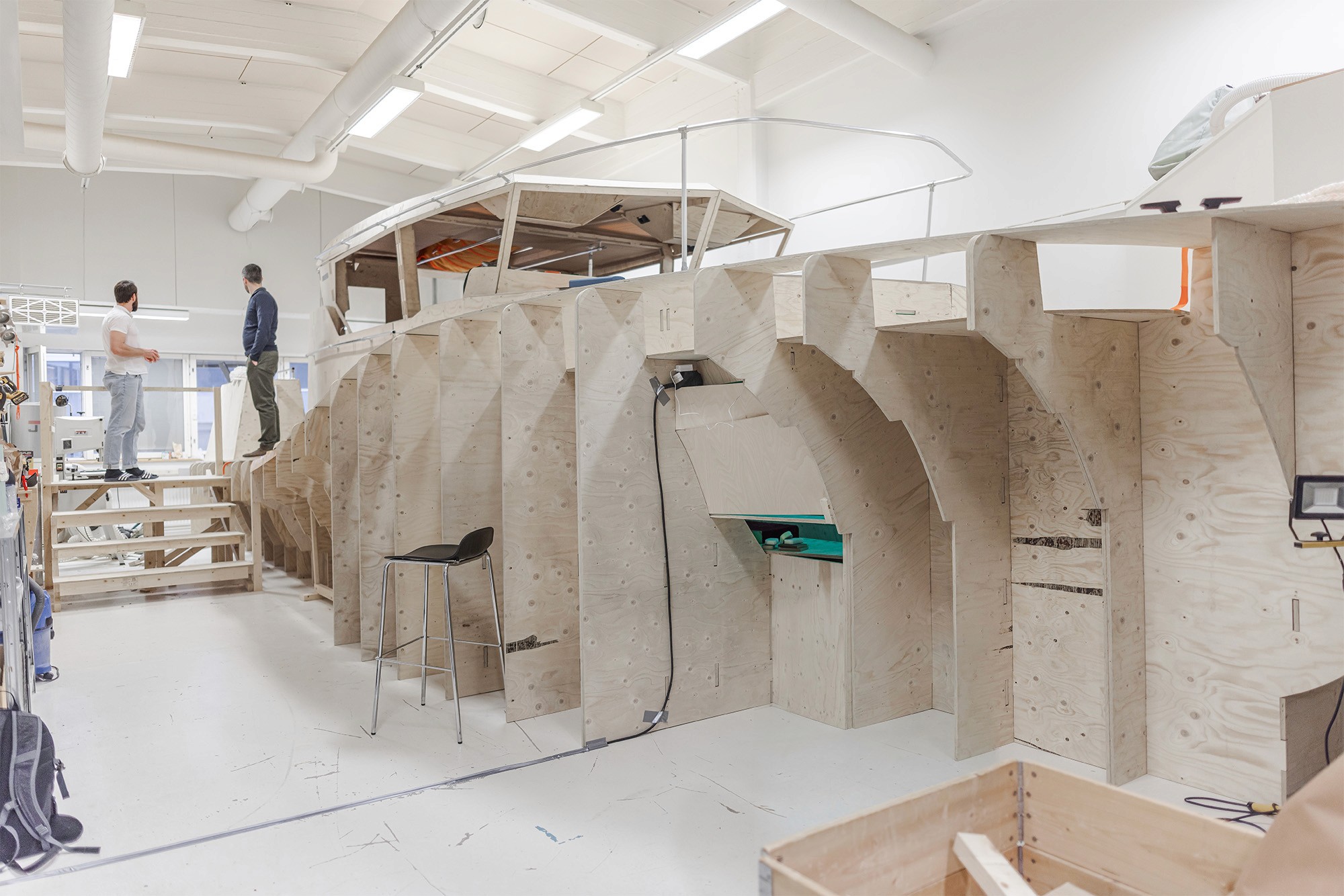
A Mockup Answers A Different Question
A mockup is not built to check whether the CAD model is correct. Modern modelling is dimensionally reliable, and clash detection is routine. It is built to check whether the decisions recorded in the model are the right decisions. That is a different question, and geometry on its own cannot answer it.
What A Screen Cannot Settle
A helmsman of below-average height needs to see the water over the bow at running trim, not at rest. The throttle has to come to hand from a braced standing position as well as from the seat. Headroom has to work while stepping through from the cockpit in a seaway, not while standing still on a level floor. One handhold has to be close enough to the next to cross without letting go. A passageway has to take someone carrying equipment in both hands while the boat is moving
People also disagree with a rendering in ways they cannot articulate until they can stand in it. A layout that reads well on screen can feel wrong in a way that only becomes specific once someone sits down and reaches for something.
Timing Is Most Of The Value
A mockup is cheap. Foam, plywood, cardboard, printed panels and tape. Days rather than weeks.

Its value comes from where it sits in the programme. The cost of reversing a decision rises steeply through a project. A change that costs a sheet of plywood at the mockup stage costs tooling, schedule and rework once the first hull is out of the mould, and it costs the same again on every unit already committed.
A mockup does not make a design better by itself. It moves the discovery of problems to the point on that curve where fixing them is still cheap.
Match The Fidelity To The Question
A mockup does not need to be a boat. It needs to be whatever answers the question in front of it.
A seat, console and screen on a trolley settles helm ergonomics. A full cockpit section settles crew circulation and where people brace themselves. A partial deck section settles hatch access, handhold layout and how gear is handled over the side. Detail beyond what the question requires is time spent for nothing.
Who Should Be Standing In It
The people who will use the boat, not only the people designing it.
For a rescue craft that means crew who will work off the deck at night in a seaway. For a workboat it means the operators, and the technicians who will have to reach the machinery in five years’ time. For a production boat it means the yard, because buildability problems surface at the same moment the ergonomic ones do.
Analysis and simulation answer questions about physics. A mockup answers questions about people. Both are considerably cheaper than answering them at the first build.